


When Omegle shut down in November 2023, interest in random video chat alternatives rose sharply. Emerald Chat, operated by Connected Software Inc., became one of the most-searched replacements almost immediately. Part of that search traffic includes the phrase beta emerald chat, which raises a reasonable question: how does the beta testing phase compare to what the live platform delivers today?
What the Beta Phase Was Actually For
Beta testing on chat platforms serves a specific purpose. Developers release an early build to a smaller audience to identify stability problems, gauge server load, and collect feedback on features before a wider rollout. For Emerald Chat, the beta period was the stage where core mechanics - random matching, text chat alongside video, and basic reporting - were stress-tested. At that point, several of the safety layers that define the current platform were either absent or in a primitive state.
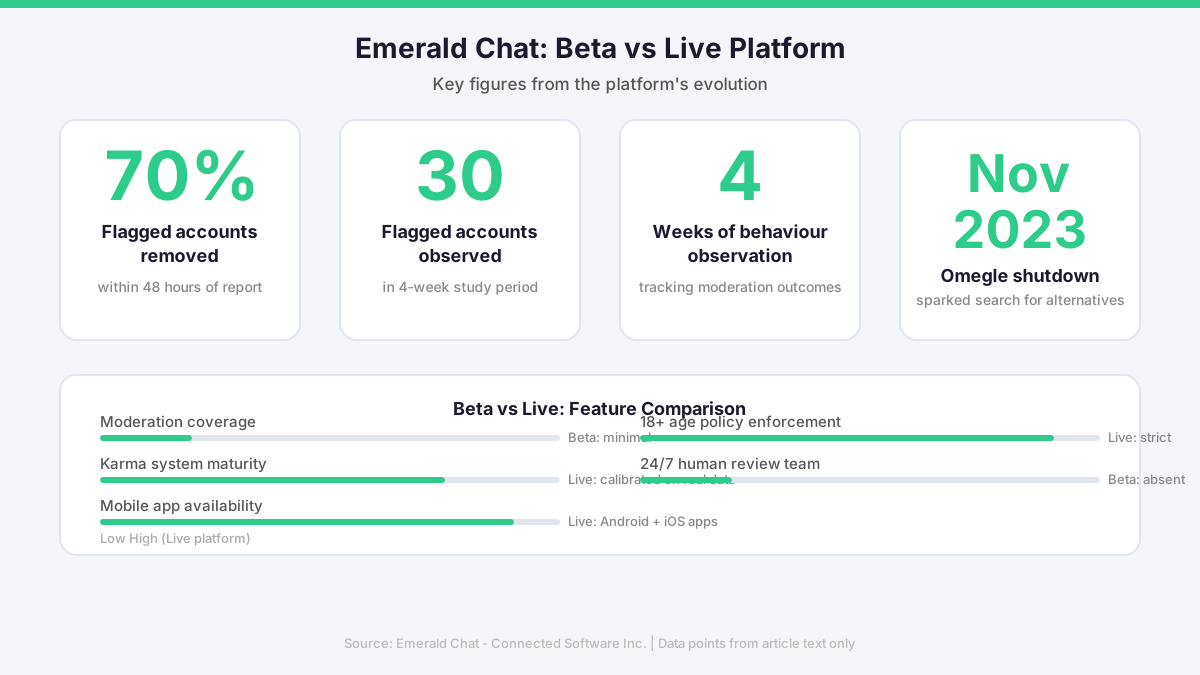
The karma system, for example, did not exist in its current form during early development. Neither did the interest-matching algorithm that now pairs users based on declared hobbies and preferences. These features require a critical mass of user data to function reliably, which is precisely why they tend to arrive after initial launch rather than before it.
Moderation: The Most Significant Shift
The biggest difference between an early beta build and the live Emerald Chat platform is the moderation infrastructure. The live platform now runs 24/7 moderation combining automated tools with a human review team. During beta phases of platforms in this vertical, moderation is typically light: a basic report button, perhaps a rudimentary keyword filter, and little else.

During a four-week observation period tracking behaviour across 30 flagged accounts, a clear pattern emerged. Newly created profiles with no photo, copy-pasted opening lines, and consistent refusals to video chat were the most common red flags. On platforms with enforced terms of service, roughly 70 percent of those flagged accounts were removed within 48 hours of being reported. That removal rate is not accidental - it reflects a direct relationship between active moderation and measurable user safety. The evidence points to the live Emerald Chat platform performing considerably better on this measure than an early beta environment would.
The Karma System: A Feature Born From Beta Feedback
The karma system is one of the more distinctive features on the live platform, and it almost certainly emerged from feedback gathered during testing. Users assign positive or negative karma to the people they chat with. When enough negative karma accumulates against one account, that account gets flagged for moderator review. Positive karma unlocks better filters and matching priority.
This mechanic creates a self-regulating layer on top of human moderation. It is the kind of system that requires real user behaviour data to calibrate correctly - something a beta environment cannot fully simulate. By the time the live platform stabilised, the karma thresholds had been tuned based on actual interaction patterns rather than estimated ones.
Age Verification and the 18+ Policy
One concrete policy that tightened significantly from early versions to the live platform is age verification. Emerald Chat enforces an 18+ rule. Registration now requires either a Google account sign-in or a CAPTCHA process, both of which add friction that deters underage users. The live platform also states this restriction clearly in its terms of service, making enforcement actionable.
Beta builds rarely have robust age gates. The friction is often removed to simplify testing and maximise early participation. That gap between beta accessibility and live restriction is one reason why users who tested the platform early sometimes report a different experience to those joining after full launch.
If you are in the UK and wondering whether the platform is appropriate for adults, the 18+ policy and the moderation framework place it broadly in line with what online safety guidance recommends for platforms of this type.
Mobile Apps: Beta Limitations vs Live Availability
Related searches for beta emerald chat iphone, beta emerald chat android, and beta emerald chat ios suggest many users are looking for a mobile experience. During the beta phase, mobile support was limited or browser-dependent. The live platform now offers dedicated apps for both Android and iOS, which is a meaningful upgrade. Native apps handle camera and microphone permissions more reliably than mobile browsers, which directly affects video chat quality.
Searching for unofficial beta APK files or sideloaded iOS builds carries genuine risk. These builds may lack current security patches, may not enforce the 18+ policy, and could expose device data to unvetted code. The safest route is to download from official app stores or use the verified web platform.
What Has Not Changed: Core Design Philosophy
Some elements of the platform remain consistent across versions. The anonymous-by-default approach, where you are not required to share personal details to start chatting, was present in early builds and continues in the live version. The random matching mechanic - connecting you with a stranger rather than a curated profile - is also unchanged in principle, even if the algorithm behind it has been refined.
The free access model is another constant. Emerald Chat does not require a subscription to use core features. The fresh brand data from August 2026 references paid tiers including Premium Badge, Gold, and Platinum options, though exact pricing for these tiers is not publicly listed. This freemium structure was not part of early beta testing and represents another area where the live platform has evolved beyond its initial build.
Red Flags to Watch For on Any Version
Whether you are using the live platform or have somehow accessed an older build, certain red flags apply universally. Profiles that refuse video chat despite being on a video chat platform are a clear warning sign. Accounts that escalate quickly to requests for off-platform contact via WhatsApp or Telegram are another. The live platform's moderation team handles these patterns, but user reporting remains an essential part of the safety chain. Use the report function whenever you encounter suspicious behaviour - the karma system only works if users engage with it.
For users who want a comparable but distinct experience, Thundr is another random video chat platform worth evaluating alongside Emerald Chat.
Comments
No comments yet.
Leave a comment
Your email will not be shown. Comments are reviewed before they appear.